Water lies at the heart of climate resilience and economic stability.
As climate pressures intensify, water-related risks – from scarcity to flooding to pollution – are no longer distant concerns. They have farreaching impacts on economies and societies, affecting infrastructure, supply chains, financial performance and long-term growth, with the poorest hit hardest and global water targets off track.
Despite this, the link between water risk and financial decision-making remains underdeveloped. While the technical water community understands these challenges, translating that knowledge into tools, metrics and investment opportunities that resonate with investors has been difficult. This paper addresses that gap.
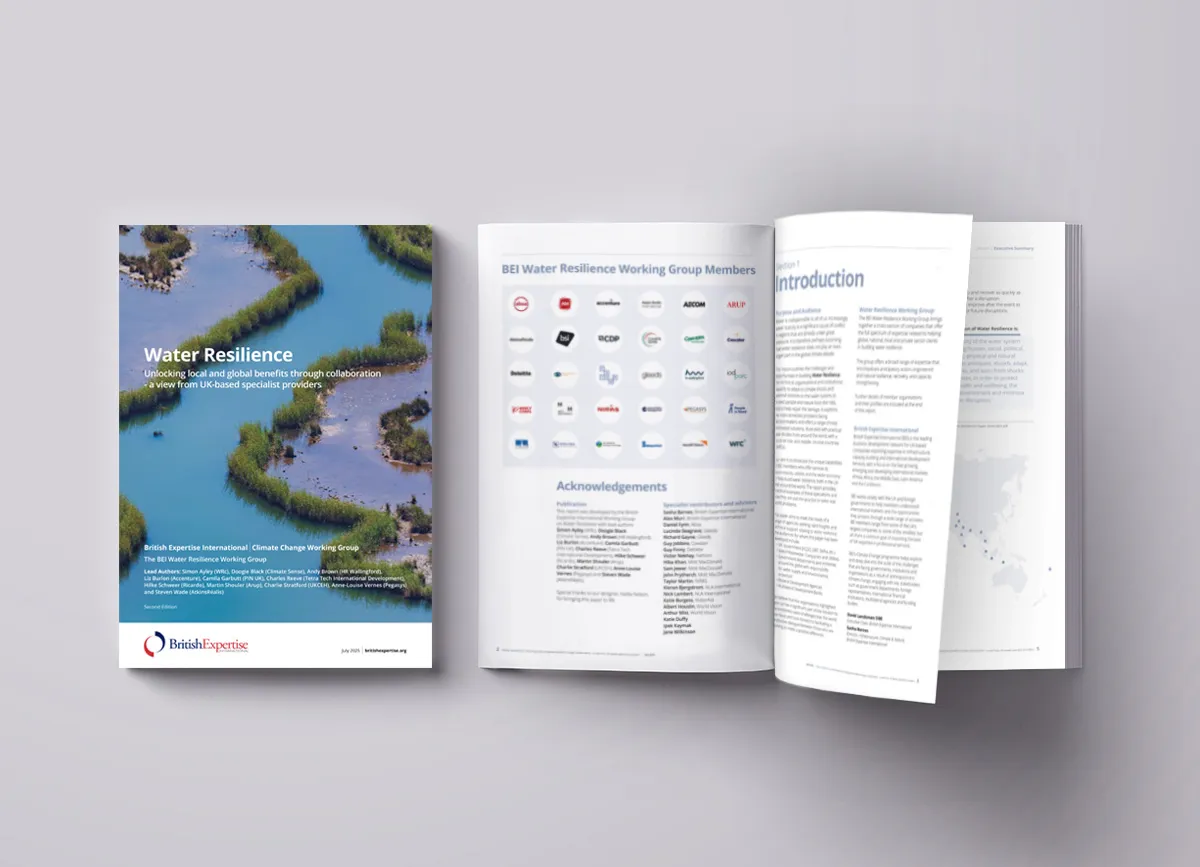
At BEI, we have been convening a Water Resilience Working Group for the last two years, publishing two editions of a report aimed at multilateral funders, policymakers and the public sector. Our November roundtable event, ‘Water Risk and Finance: Bridging the Gap’, sought to turn members’ water resilience expertise into actionable insights for investors and financiers. The discussion aimed to explore how shared responsibility on stewardship and risk can translate into practical pathways which enable investors and financial institutions to identify, price and finance water-related opportunities and risks more effectively. This roundtable followed an initial multi-panel event last year focusing on ‘Turning Water Risk Into Resilience’, in which the concept of water risk equating to financial risk was discussed by our panellists.
The insights from these conversations highlight several prospects for sustainable investment pathways in water risk and showcase how the financial sector can focus their efforts on activities that support eventual resilience. This paper identifies practical ways forward, emphasising collaboration across sectors and between public and private actors, and alignment between global expertise and local delivery. Its timing is significant, ahead of major international water and climate events later this year such as the International Water Association Conference in October, the UNFCCC conference in November and the UN Water Conference in December.
Ultimately, turning water risk into resilience will require coordinated effort and sustained investment – but it also presents a major opportunity to deploy capital in ways that strengthen economic systems, enhance asset performance and support long-term, climate-resilient growth.
British Expertise International
British Expertise International (BEI) is the leading business development network for UK-based companies exporting expertise in infrastructure, capacity building and international development services, with a focus on the fast-growing, emerging and developing international markets of Asia, Africa, the Middle East, Latin America and the Caribbean.
BEI works closely with the UK and foreign governments to help members understand international markets and the opportunities they present through a wide range of activities. BEI members range from some of the UK’s largest companies to some of the smallest, but all share a common goal of exporting the best of UK expertise in professional services.
BEI’s Climate Change programme helps explore and deep dive into the scale of the challenges that are facing governments, institutions and organisations as a result of anthropocentric climate change, engaging with key stakeholders such as government departments, foreign representatives, international financial institutions, multi-lateral agencies and funding bodies.