

Social and Emotional Learning (SEL) is increasingly recognised as a critical component of early years education, helping children develop empathy, emotional intelligence and the skills needed to build inclusive and respectful societies. Alongside traditional academic learning, SEL equips young children with the social and emotional foundations that support lifelong wellbeing, positive relationships and future success.
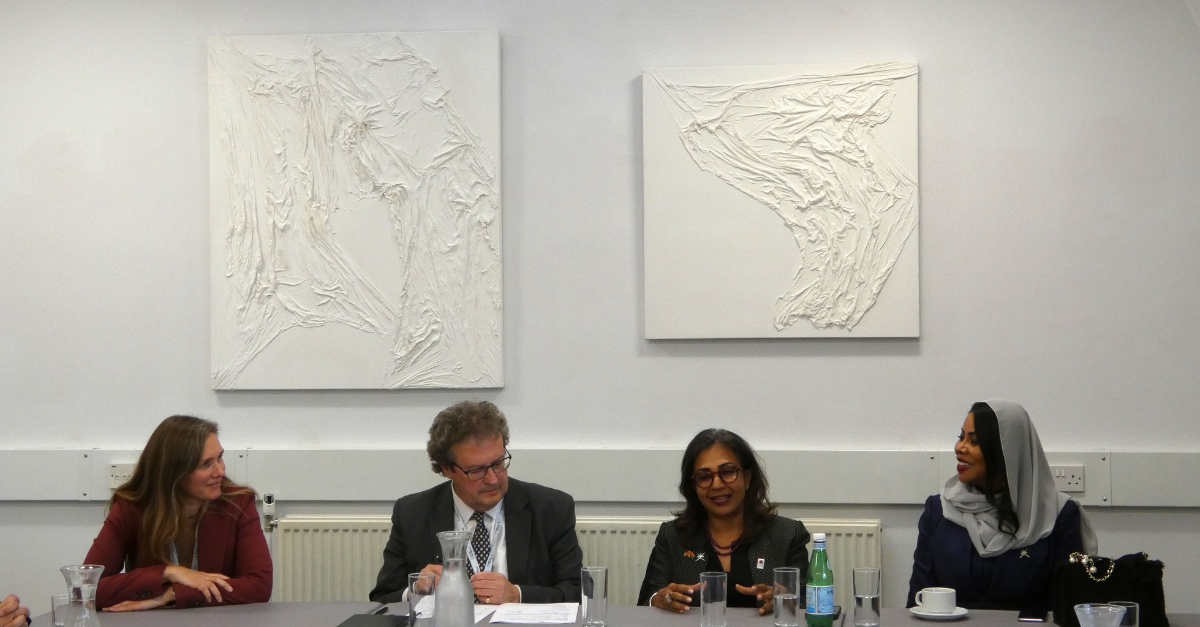
Our recent panel discussion explored the role of SEL in education for children aged 0-6 and examined its wider impact on society. Panellists evaluated the long-term benefits of getting early years education right, including its contribution to psycho-social wellbeing, equality and social cohesion. The conversation also addressed how families and carers can be better engaged in SEL, what barriers remain for disadvantaged communities, how SEL can be embedded more effectively within education systems, and the role of employers and policymakers in supporting children's social and emotional development.
Panellists included:
• Leslee Udwin, Founder and Executive Chair of Think Equal, which advocates that SEL must be taught as a core foundational pillar alongside numeracy and literacy. Think Equal created the world’s first holistic comprehensive SEL programme in three age-appropriate levels between the ages of three and six, comprising no less than 25 best practice SEL competencies through tangible tools which achieve the outcomes of inclusion, equality, respectful relationships and wellbeing.
• Emma White, Deputy Headteacher of Heathfield Knoll, which is part of the Aldates Global Education network, a forward-thinking group of leading schools and colleges across the UK and overseas. Aldates Global Education acquired Heathfield Knoll School in 2020 with a clear vision: to invest in its future and build upon its long-standing reputation as a distinguished independent school. The partnership is founded on a shared commitment to academic excellence, a nurturing ethos, and a focus on preparing students to become confident, compassionate, and resilient citizens.
• Neil Leitch, CEO of the Early Years Alliance. The Early Years Alliance represents the interests of early years providers across the country, providing guidance, information and training to a network of over 28,000 members and supporters. They provide high-quality, affordable childcare and education throughout the country, working in partnership with families and communities to create inclusive settings where children feel safe, supported, and inspired to explore the world around them.
A foundational tool for lifelong development: why does SEL matter and what can it achieve?
SEL shapes lifelong development, with the early years period serving as a formative framework for empathy, emotional regulation, values, fairness and children’s understanding of others. Neuroscientists are clear that the optimal time to change mindsets, attitudes, and behaviour is before age 6, after which deeply ingrained interpersonal habits can be hard to break. With this in mind, SEL should be viewed as an essential part of the curriculum and not merely an academic ‘extra’. Despite its critical importance, SEL is heavily underprioritised in British schools, especially where it must compete with more easily measurable subjects, such as numeracy and literacy, which develop ‘hard’ academic and technical skills.
Yet over the past six decades, numerous studies have shown the positive effects of high-quality SEL programmes in early childhood throughout later life. For example, Nobel laureate James Heckman found that SEL taught in early years not only has long-term (into midlife) positive effects on crime, employment, health, cognitive and non-cognitive skills for the participant, but also benefits those around them. Other expert advocates for SEL programmes such as Think Equal include:
• Sir Ken Robinson, world-renowned educationalist
• Dr Marc Brackett, Co-director of the Yale Center for Emotional Intelligence
• Professor Richard Davidson, renowned neuroscientist and founder and chair of the Center for Healthy Minds.
Participants in the roundtable described their firsthand experience of the benefits of SEL. Neil Leitch, who was originally introduced to the membership organisation Early Years Alliance as a volunteer, highlighted how the love and support he received from his mother helped him through a difficult childhood, illustrating the profound influence of caring relationships and emotional support. Similarly, Emma White, Deputy Headteacher at Heathfield Knoll – which has a high proportion of students with Special Education Needs (SEN) and Education, Health and Care Plans (EHCPs) – supported the argument that when children receive the right support in their early years, it can have a positive impact on their later development. She also highlighted the growing prevalence of SEL-related needs following the COVID-19 pandemic, which is widely accepted to have led to a significant decline in children’s socio-emotional wellbeing.
SEL as a preventative investment: improving wellbeing, reducing crime and saving public money
SEL, or the lack thereof, can have a significant yet overlooked impact on emotional wellbeing, social behaviour and even criminal activity.
To highlight the risks of getting early years education wrong, Leslee Udwin gave harrowing insights into her filmmaking experience in India, in which she spent seven months interviewing the perpetrators of the 2012 Delhi bus gang rape and murder. These men, alongside other convicted rapists in the prison, displayed a notable lack of remorse and disregard for human life – attitudes which had clearly been programmed in them. While many of these men had received limited education, Leslee noted that an attitude of victim-blaming and a lack of empathy were also prevalent amongst their lawyers and more highly educated members of society. This highlighted the constraints of academic education alone in developing empathy and prosocial attitudes and behaviours, as well as symbolising the wider societal consequences that occur when these qualities are not adequately nurtured. Leslee argued that violence can be a symptom of ‘othering’, reinforcing the importance of teaching children to understand and respect others with differing characteristics to themselves (such as race and gender) from an early age.
During the panel discussion, an overriding theme was that governments often spend significant sums addressing problems, which can come at a substantial cost, rather than investing in prevention. This is evident in two key areas: behaviour in schools and wider societal outcomes. A lack of SEL can leave children more vulnerable to emotional and behavioural difficulties, including bullying, anxiety and mental health disorders. As mentioned above, the longer-term consequences can extend beyond the classroom, with panellists highlighting the potential link between inadequate SEL and criminal behaviour. It was pointed out that, in the UK, the cost of providing Think Equal programmes and resources to 5,800 children is comparable to the cost of imprisoning one violent offender for one year. Investing in SEL could therefore help reduce future demand for social care and criminal justice services, while supporting children to become responsible, empathetic citizens.
Roundtable participants argued that government priorities must therefore reflect these long-term benefits, recognising that the value of investing in early years education extends far beyond simply enabling parents to return to work and increasing school readiness. As Neil Leitch highlighted, the country must recognise the importance of investing in children who will contribute to keeping society safe.
Making the case for SEL in the UK
While SEL is currently undervalued in the UK, it has been successfully adopted across the globe in many instances.
Think Equal revealed that 16/42 countries they work with have mandated SEL as a compulsory part of the curriculum. This is achieved through the programme’s replicable, scalable methodology, which strives to strengthen government systems and build the capacity of national ministries of education so that the programme can be delivered independently over time, ensuring long-term ownership and continuity. The charity aims to provide governments with 50 per cent of the funding required for every child across their country to learn the Think Equal programme, on the condition that ministries embed the programme in the national curriculum, making it effectively mandatory for every child.
This global uptake prompts a wider discussion on how momentum towards SEL can be accelerated in the UK. Panellists and roundtable attendees agreed on a number of recommendations:
1. Improving conditions for early years teachers
While early years teachers have one of the most important jobs in society, this is not widely reflected in how they are regarded in terms of professionalism and status. In many instances, they are undervalued because their work is seen primarily as childcare rather than education, overlooking the critical role they play in shaping children’s social and emotional development. With these roles significantly underappreciated and under-resourced, the government must raise the status of the early years workforce and recognise investment in its development as a priority. This includes ensuring practitioners have the resources, training and support needed to embed SEL effectively in their work.
The barrenness of the current funding landscape highlights the need for greater coordination and sustained investment. During the roundtable, participants discussed how, in 42 local authorities in the UK, the national health service and the police are funding SEL initiatives, suggesting that the benefits of early intervention are in fact already recognised and being led by those outside the education sector.
A participant from Early Years Hounslow noted that 78% of early years teachers wanted more resources for SEL but lacked the funding to access them. Without adequate investment, institutions risk placing unfair expectations on their practitioners to deliver essential support without the capacity or resources to do so. There is therefore a collective responsibility to make the case for the value of early years education to government and HM Treasury, ensuring that funding decisions accurately reflect this long-term value.
2. Strengthening the government-led response
Panellists and roundtable attendees agreed on the urgency of a top-down, government-led approach to embedding SEL across British schools and early years settings. While individual schools and practitioners can make a significant difference, a more consistent approach requires national leadership, clear expectations and sustained investment to ensure that SEL is not dependent on local priorities or available funding.
For Neil, success in government reform in early years care would mean appointing a cabinet minister dedicated to the first five years of a child’s life – an individual who understands the importance of early childhood development and can champion it across government. Such a role could help bring greater coherence to policy and funding across education, health and social care, ensuring that early intervention is treated as a shared national priority rather than the responsibility of individual services. By giving the early years a stronger voice in government, ministers could help ensure that children’s social and emotional development receives the attention and investment it needs from the outset.
3. Continuing to develop parental engagement
SEL is most effective when parents are involved, with panellists emphasising the importance of reinforcing learning beyond the classroom. With families’ day-to-day routines and schedules often associated with a significant degree of rush and chaos, early years care can provide children with a more structured environment in which to develop social and emotional skills. However, for these lessons to have a lasting impact, they must also be reinforced at home.
Achieving this requires ongoing support to bring parents into the process. As many families have negative experiences associated with school, they can be defensive or reluctant to engage. Additionally, they may believe it is the school’s job to embed SEL within their child’s learning or have limited time to help children extend their learning outside the classroom. Participants from Hounslow Early Years spoke of the difficulties of engaging these families, highlighting the need for more accessible ways to involve parents and support children’s development beyond the classroom.
Teachers at the roundtable spoke of the value of parents’ evenings and other after-school sessions, providing a space where children, teachers and parents can discuss problems and ask questions. These opportunities can help build trust between families and educators, while giving parents practical guidance on how to reinforce SEL in everyday life.
Leslee also discussed the benefits of involving parents in Think Equal, which provides home-learning kits and ten-minute weekly activities linked to the Think Equal classroom SEL lessons. Children often enjoy teaching their parents what they have learned, creating a natural opportunity to practise SEL together and extend its impact into family life. A case study from Somalia illustrated this effect: following SEL teaching, the mother of one boy described empathy and problem-solving as forms of true strength. Using tools such as kindness charts, she observed that her son had begun helping his siblings more, demonstrating how learning in the classroom can translate into positive changes at home.
To strengthen this approach, providers must consider how best to reach families who may be harder to engage and ensure that parental involvement is realistic for different circumstances. This also raises a wider question about how SEL is introduced to parents and early years providers, including whether existing training and learning modules adequately equip practitioners to explain its importance and help families reinforce it at home.
4. Positioning SEL as an active driver of economic growth
In tandem with acting as a preventative, cost-saving measure, SEL should also be positioned as an active driver of economic growth, equipping children with the skills they need to thrive in the future workforce.
This means broadening the conversation beyond the immediate benefits of SEL for children’s wellbeing and behaviour to recognise its contribution to the skills employers increasingly value. The OECD and World Economic Forum’s work on the future of skills, for example, highlights the importance of human capabilities such as empathy, collaboration and problem-solving. Panellists suggested that greater engagement with organisations such as the World Economic Forum could help strengthen this narrative, shifting the emphasis beyond traditional measures of educational attainment, such as science and literacy, to give social and emotional development greater recognition as a core foundation for future skills and prosperity.
While teachers and education practitioners widely recognise the importance of SEL at a grassroots level, its wider narrative must continue to evolve to demonstrate its relevance to national productivity, employment and economic growth. There are clear opportunities to connect this to the current skills and employment landscape. For example, young people with social, emotional and mental health (SEMH) needs and an Education, Health and Care Plan (EHCP) can face additional barriers to entering employment or continuing in education. Investment in SEL, alongside appropriate support from education providers, social workers and other services, could help young people develop the confidence, resilience and interpersonal skills needed to participate more fully in society and the economy. Case studies from Yorkshire discussed in the roundtable highlighted concerns around social cohesion and the importance of positive role models, reinforcing the need for coordinated support for young people at risk of becoming not in education, employment or training (NEET).
SEL also has implications for the wider business environment. Businesses need stable, safe and cohesive communities, as well as a workforce equipped to collaborate and adapt, in order to thrive. Therefore, supporting children’s social and emotional development should be seen as a shared responsibility, with government and businesses working together to invest in the conditions that enable long-term prosperity.
Employers and policymakers also have a role to play in supporting parents and families. As family-friendly working practices become increasingly important, businesses should consider how workplace policies can help employees balance work with caring responsibilities. This includes building trust in flexible working arrangements, including working from home where appropriate, to give parents greater flexibility without compromising productivity.
Conclusion
When asked what success would look like when a child leaves nursery, Neil Leitch was clear: a kind, gentle, loving child who will go on to retain these traits in adulthood.
SEL lays the foundations for a healthier, safer and more cohesive society, while equipping future generations with the skills needed to thrive.
To maximise the benefits of work delivered by organisations like the Early Years Alliance and Think Equal, there must be a wider shift from treating social and emotional development as an optional educational addition to recognising it as a national priority. This means stronger government leadership, sustained investment in the early years workforce, better support for parental engagement and closer collaboration across education, health, social care and business. It also means recognising the costs of inaction, where insufficient investment in prevention can leave public services such as the NHS, the police force and MOJ addressing challenges that might otherwise have been reduced through earlier intervention.
Within this environment, getting early years education right is not simply an investment in individual children – it is an investment in the country’s long-term social and economic prosperity.